
Design with meaning: How Grassfish shapes systems through culture
October 30, 2025
by Stefan Porsche
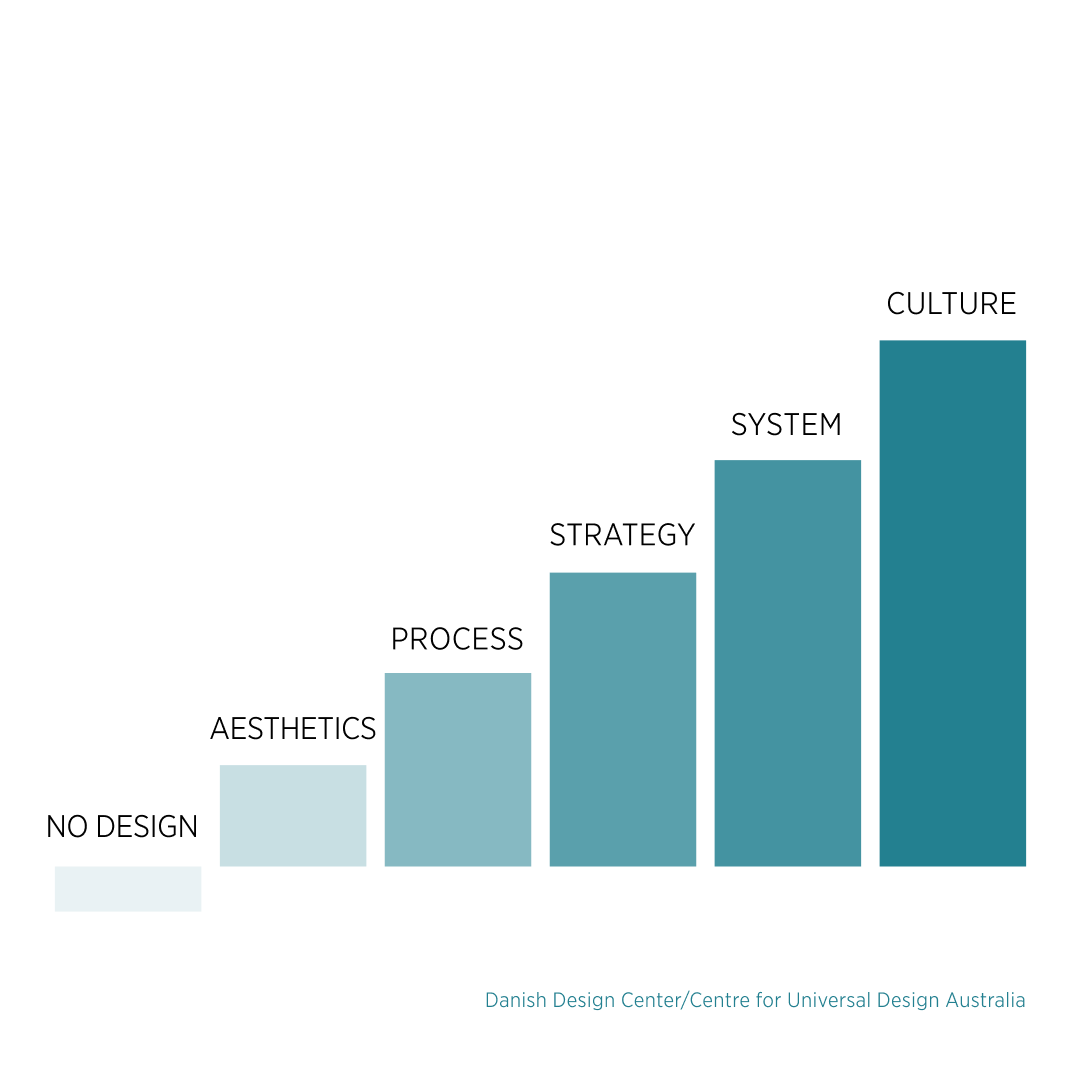
Design has many facets. All too often it is still interpreted as merely the aesthetics of objects, such as furniture, cars, lemon squeezers, or the buttons on a website. If something looks nice, then it is considered to be designed. However, this is only the lowest rung on the so-called “design ladder,” which describes the maturity of design in an organization.
In fact, the purpose of design is to create meaning. It is the task of a design process to communicate something and to make things understandable within a certain context, a suitable environment or a possible use (Klaus Krippendorff). This is an ongoing process, as user needs, business goals, or technical capabilities are constantly changing. What made sense yesterday may be worthless tomorrow.
Design, therefore, is not something that is done at a specific moment by a dedicated person. It’s the way we perceive what’s already there, the way we find ideas for improvement, and the way we make things really work. Design is any action aimed at changing existing situations into preferred ones (Herbert A. Simon). We design by the questions we ask, by the options we see, and by the technologies we choose.
We call this process product design for objects and architecture for buildings. For interfaces between technical devices and their users, the term “user interface (UI) design” is appropriate. We talk about “user experience (UX) design” when considering the overall experience of a user with a product or service. This is not limited to digital products. Any object or service that leaves users feeling confused or helpless suffers from poor UX. We even say out loud, “That makes no sense to me,” when the design has failed to convey meaning in context.
We tap onto the strategy step of the design ladder when we start to see things more holistically. For example, we consider how the overall interaction between a customer and a brand’s various products and services is shaped. In this context, design must provide meaning for the entire brand and “customer experience (CX) design” becomes part of the business model.
One of the most diverse, comprehensive, and effective points of contact between a customer and a brand is the brick-and-mortar store, a platform that allows a brand to naturally showcase its many facets and nuances. A physical space enables us to experience our surroundings with all our senses, grasp stories fully, and develop relationships organically. Considering the many channels through which customers experience a store, both consciously and subconsciously, makes it clear that designing them is not an easy task.
The challenge lies in ensuring that everything works together seamlessly, providing a consistent experience within the store and between the store and the outside world, as well as with other online and offline products and services that the brand offers. In the context of a brand, every interaction deserves to be designed. This makes the store a system of interconnected touchpoints, front- and backstage components – and, of course most importantly, humans. However, as systems thinking pioneer Russell Ackoff famously noted, a system is more than the sum of its parts’ behavior. It is the product of their interaction. Designing a system, then, means shaping relationships.
These relationships can obviously be technical, such as transferring content between our IXM platform and a screen. They can also be functional, such as providing support to staff to improve their quality of service. Or they can be experiential, such as building immersive stages that allow customers to fully engage with brand experiences. These are just some of the ways in which we facilitate communication, outcomes of the design process. They all serve the same higher purpose, though: shaping relationships between customers and brands. By designing experiences, we empower brands to become more customer-centric – which is our Grassfish culture.
Do you want more insights like this?
Subscribe to our newsletter, follow Grassfish and Stefan Porsche on LinkedIn, or talk to our team about how the Grassfish team can help you create designs with meaning.